What Should You Wear Duck Hunting in Louisiana?
Dress for the stretch of season you are hunting. For September teal, wear light, breathable clothes, a hat and breathable waders. For the November opener, wear a base layer, a light fleece and a rain shell you can peel off as the sun comes up. After Dec 19, in the late split, build the full stack: a wool or synthetic base, an insulated middle layer, a windproof shell and insulated waders. In every month, dress for the water temperature, not the air.
TLDR:
- Teal season (Sept 19 to 27): Baton Rouge averages a high near 89°F. Think heat, sun and bugs, not cold.
- The opener (Nov 14 West, Nov 21 East): normal lows sit in the upper 40s with highs near 71°F. Layers you can peel matter most.
- The late split (Dec 19 to Jan 24 West, Jan 31 East): normal lows drop to the low 40s. Wind on open water makes it feel colder.
- Base layer: wool or synthetic next to your skin. Wet cotton stays wet and cold.
- Water: the National Weather Service says to dress for the water temperature, not the air temperature.
- Hunter orange: Louisiana’s rule is tied to deer season and to what you carry. Read it before you walk in.
Louisiana duck season covers almost five months, and the weather swings with it. The same marsh that has you sweating through a shirt in September can freeze your fingers on a boat ride in January. A single “duck hunting outfit” does not exist here. What works is a set of layers you add as the season gets colder and peel off as the morning warms.
This guide walks the 2026-27 season stretch by stretch, using the season dates from our Louisiana duck season 2026-27 guide and 30-year normal temperatures from NOAA.
Teal mornings and the opener are pocket tee weather. The SDO pocket tee is a Comfort Colors blank with the duck foot on the back, in sizes S to 3XL. Request a quote for your size.
How the Season Changes What You Wear
The season comes in three stretches, and each one asks for a different setup. The grid below lines up the 2026-27 dates by zone with what the weather normally does and what to wear for it.
The dates come straight from LDWF’s schedule. Here is the official table for teal and ducks, as published on eRegulations, LDWF’s licensed publisher:
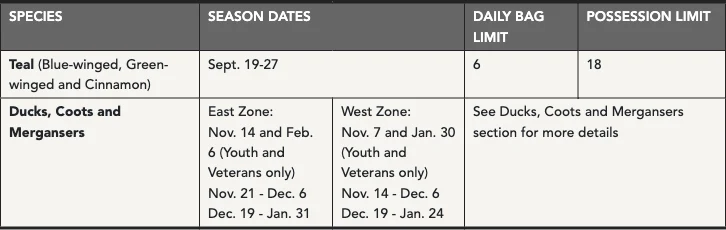
Not sure which column applies to you? Our Louisiana duck zones map walks the East and West Zone line highway by highway.
Teal Season: Dress for Heat, Sun and Bugs
Teal season runs statewide from Sept 19 to 27. In Baton Rouge, the normal September high is about 89°F and the normal low is about 69°F, per NOAA’s 1991-2020 monthly normals. Lake Charles runs a degree or two warmer. Cold is not the problem in September. Heat, sun and mosquitoes are.
Dress light:
- Shirt: a lightweight tee or a thin long sleeve in a color that blends with the marsh. Long sleeves help with sun and bugs.
- Hat: a hat with a brim for the sunrise glare. A perforated or mesh side panel lets heat out.
- Legs and feet: breathable waders or light hip boots, not the insulated pair you will want in January.
- Extras: bug spray, sunscreen and a lot of water.
A cotton tee is fine here. When it is 70°F at shooting time and climbing, a shirt that holds a little sweat is not the risk it is in January.
The Opener: Mild Days, Cold Starts
The regular season opens Saturday, Nov 14 in the West Zone and Saturday, Nov 21 in the East Zone. November normals in Baton Rouge are a high of about 71°F and a low of about 48°F. Lake Charles normals are about 72°F and 51°F.
That 20-plus degree swing is the whole story of the opener. The boat ride before daylight can feel cold, especially with wind, and by mid-morning the sun can have you peeling layers. Plan for both ends:
- Base layer: a light wool or synthetic top that moves sweat away from your skin.
- Middle layer: a light fleece or vest you can stuff in a blind bag.
- Shell: a rain jacket or wind shell. Louisiana mornings are often damp even when it is not raining.
- Head: your usual hat, plus a light beanie or neck gaiter for the ride out.
- Waders: breathable waders still work for most November hunts. Add warmer socks before you switch to insulated boots.
The key is layers you can remove one at a time. One heavy coat makes you choose between freezing at 5:30 a.m. and sweating at 9.
The Late Split: Build the Full Stack
Both zones close Dec 7 through Dec 18, then reopen Dec 19. The West Zone runs to Jan 24 and the East Zone to Jan 31, with one more youth and veterans day in each zone (Jan 30 West, Feb 6 East).
This is the cold stretch. Baton Rouge normals are about 64°F and 43°F in December and about 62°F and 42°F in January. Those are averages, so plenty of mornings land well below them, and a north wind across open water feels colder than the thermometer says.
For the late split, wear the whole system:
- Base: wool or synthetic, top and bottom.
- Insulation: a heavier fleece or a packable insulated jacket.
- Shell: a windproof, waterproof outer jacket.
- Hands and head: gloves you can shoot in, plus a warm hat or hood.
- Waders: insulated waders and warm socks. Cold water pulls heat from your legs and feet all morning.
- Spare dry layer: a dry shirt and socks in a waterproof bag. The National Weather Service’s cold weather guidance is to dress in layers and change into dry clothing right away if you get wet.
How to Layer, From Hat to Waders
Each layer has one job. Put together, they let you add or shed warmth without starting over.
Base layer. This is the layer against your skin, and it does the most work. Wool and synthetic fabrics keep insulating when they get damp. Cotton soaks up sweat and water and stays wet, which pulls heat from your body. Save the cotton tee for teal season, camp and the ride home.
Middle layer. This is your warmth. Fleece and packable insulated jackets are easy to add or remove in a blind. In November, it might be a light vest; in January it might be your thickest jacket.
Shell. The outer layer blocks wind and rain. Wind is what turns a 45°F morning on open water into a miserable one, so a windproof shell matters as much as the insulation under it.
Head and hands. A hat with a brim helps with glare at sunrise. Add a beanie or a neck gaiter once the lows drop, and carry gloves you can still work a safety in.
Waders. Breathable waders for warm water early in the season, insulated waders once the water cools. Wear a wader belt, cinched snug.
Dress for the Water, Not Just the Air
Most duck hunts happen on or near water, and water is where the real cold risk sits. The National Weather Service’s cold water safety page is direct about it:
- Always wear a life jacket in and around the water.
- Dress for the water temperature, not the air temperature.
- Cold shock from water of 50 to 60°F can be as severe as it is from water at 35°F.
- The gasp reflex from sudden immersion can be triggered by water as warm as 77°F.
So the boat ride is part of what you dress for. If you run a boat to the blind, wear a life jacket that fits over your layers and keep a dry bag with a change of clothes in the boat.
Check the water before you check the forecast. A mild January afternoon does not mean the water has warmed up.
Do Duck Hunters Need Hunter Orange in Louisiana?
Louisiana’s hunter orange rule is tied to deer season and to what you carry. Per LDWF’s deer hunting regulations, anyone hunting any wildlife during the open firearms deer season while possessing buckshot, slugs, a primitive firearm or a centerfire firearm must display at least 400 square inches of hunter orange or blaze pink on the head, chest or back. On privately owned land, an orange or pink cap or hat can stand in for the 400 square inches.
The rule turns on those items, so read the full wording and the exceptions before your hunt. Even when the rule does not apply to you, an orange cap for the walk in and out is cheap insurance when deer hunters share the woods. Stow it once you are in the blind.
What to Wear by Stretch of Season
Here is the whole guide on one table.
| Piece | Teal (Sept) | The opener (Nov) | The late split (Dec 19 on) |
|---|---|---|---|
| Base layer | Light tee or thin long sleeve | Light wool or synthetic | Wool or synthetic, top and bottom |
| Middle layer | None | Light fleece or vest | Heavy fleece or insulated jacket |
| Shell | None, or a light rain jacket | Rain or wind shell | Windproof, waterproof jacket |
| Head | Brimmed hat | Brimmed hat plus a light beanie | Warm hat or hood, neck gaiter |
| Hands | None | Light gloves | Insulated shooting gloves |
| Legs and feet | Breathable waders or hip boots | Breathable waders, warm socks | Insulated waders, warm socks |
| In the boat | Life jacket, water, bug spray | Life jacket, dry bag | Life jacket, dry bag with spare clothes |
Where Southern Dreams Outdoors Fits
We make the pieces you wear when it is warm enough to show them off, and before and after the hunt when it is not:
- Pocket tees: the SDO pocket tee is a Comfort Colors blank with the SDO wordmark on the pocket and the duck foot on the back. It is a teal season shirt, a camp shirt and an after-the-hunt shirt. Under waders in January, put a wool or synthetic base layer next to your skin instead.
- Rope hats: 5-panel rope hats with an unstructured crown and the woven SDO patch, one size. The cream, purple and gold hat has perforated sides for hot days in the blind, and the khaki hat has an old-school camo brim.
- The SDO Mossy Oak® shirt: Mossy Oak® camo with the SDO duck foot, sizes S to 3XL.
Every order starts with a custom quote. Pick your size and color on the product page, and we will follow up with you. Check the size guide before you request a quote.
Common Questions About What to Wear Duck Hunting in Louisiana
What should I wear duck hunting in Louisiana in November?
Wear layers you can peel off. Baton Rouge’s normal November low is about 48°F and the normal high is about 71°F, so a cold boat ride can turn into a warm morning. A light wool or synthetic base, a light fleece and a rain or wind shell cover most opener hunts. Breathable waders usually still work.
What should I wear duck hunting in January?
Build the full stack: a wool or synthetic base top and bottom, an insulated middle layer, a windproof and waterproof shell, a warm hat, gloves you can shoot in and insulated waders. January normals in Baton Rouge are about 62°F and 42°F, and wind on open water makes it feel colder.
Is cotton OK for duck hunting?
Cotton is fine in hot teal season weather and for camp. In cold weather, keep it off your skin. Cotton holds water and stays wet, which pulls heat from your body. Use wool or synthetic as the layer next to your skin when it is cold or when you expect to get wet.
What should I wear for teal season in Louisiana?
Dress for heat, sun and bugs. Teal season runs Sept 19 to 27, and Baton Rouge’s normal September high is about 89°F. A light tee or thin long sleeve, a brimmed hat, breathable waders or hip boots, bug spray and plenty of water are the basics.
Do duck hunters have to wear orange in Louisiana?
Louisiana’s hunter orange rule applies during the open firearms deer season to anyone hunting any wildlife while possessing buckshot, slugs, a primitive firearm or a centerfire firearm. It requires 400 square inches of hunter orange or blaze pink, or an orange or pink cap or hat on privately owned land. Read LDWF’s full rule and exceptions before you hunt.
Dressed for the morning? Finish it with the hat. SDO rope hats are one size, 5-panel, with the woven SDO patch. Request a quote for your color.
Share